



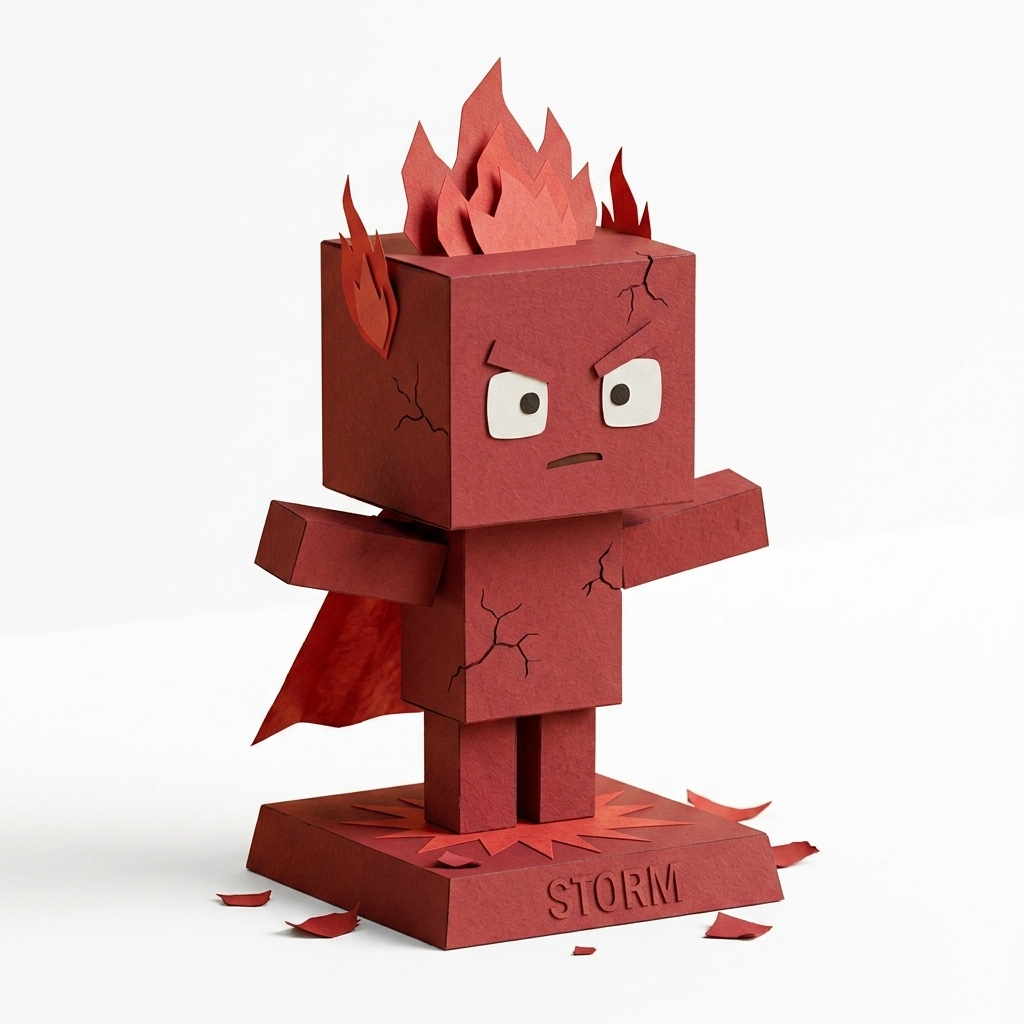
Storm
Feels everything at full volume
Your emotions hit hard and fast. You feel everything intensely — joy, anger, frustration — often before you can process it.
Your Cognitive Blueprint
The Storm brain doesn't just feel emotions — it gets ambushed by them. Where most people experience emotions as a gentle wave they can observe and manage, your emotional system operates more like a flash flood: sudden, powerful, and impossible to redirect once it starts moving.
This isn't a personality flaw or a lack of self-control. It's a neurological difference in how your prefrontal cortex communicates with your amygdala — the brain's emotional alarm system. In ADHD brains with high emotional reactivity, the prefrontal cortex (your brain's "rational executive") is slower to intervene when the amygdala fires. The result: your emotions arrive at full intensity before your thinking brain can even weigh in.
"That's So Me" Moments
+ 7 more in your full report
Your Superpowers
Emotional Depth & Intensity
You experience life in full IMAX while others are watching on a phone screen. This depth fuels extraordinary creativity, empathy, and the ability to form connections that most people describe as "the deepest relationship I've ever had." Artists, musicians, writers, and therapists disproportionately share this cognitive style — and it's not a coincidence.
Hyper-Empathy
Your emotional radar is so finely tuned that you can detect shifts in someone's mood from a single word, a micro-expression, or a change in texting patterns. This makes you an extraordinary friend, partner, and colleague — the person who always knows when something is wrong, even when everyone else is oblivious.
Passion-Driven Excellence
When you care about something, you don't just work on it — you pour your entire soul into it. This emotional investment produces work with a quality and intensity that methodical, even-keeled people simply cannot replicate. Your best work doesn't come from discipline; it comes from fire.
The Hard Parts
Emotional Flooding
When a strong emotion hits, your prefrontal cortex temporarily goes offline. You lose access to rational thinking, perspective, and impulse control — all at the same time. It's like your brain's circuit breaker trips, and the only thing left running is raw emotion. This isn't a choice. It's a neurological event that typically lasts 20-90 seconds before your thinking brain comes back online.
Rejection Sensitive Dysphoria (RSD)
Perceived rejection doesn't just sting — it physically hurts. Dr. William Dodson describes RSD as an "emotional pain so intense that it feels unbearable." A raised eyebrow, a cancelled plan, or an unreturned text can trigger a shame spiral that hijacks your entire day. Many Storm types develop elaborate avoidance strategies — never applying for the job, never asking the person out, never sharing the idea — just to preempt this pain.
Impulsive Verbal Reactions
Your mouth operates on a 0ms delay from your emotional center. During conflict, you say the thing that will cause maximum impact — not because you're cruel, but because your brain reached for the most emotionally charged words available and deployed them before your filter could intervene. The regret is immediate and crushing.
Strategy Playbook
Name It to Tame It
When an emotion floods you, say its name out loud: "I am feeling rejection." This simple act activates your prefrontal cortex (the naming centers) and reduces amygdala intensity by up to 50% (Lieberman et al., 2007). It doesn't make the feeling disappear, but it creates a sliver of space between you and the emotion — enough to choose a response instead of just reacting.
The 90-Second Surf
Neuroscientist Jill Bolte Taylor found that the neurochemical lifecycle of any emotion is approximately 90 seconds. After that, any continued emotional intensity is being sustained by your own thinking patterns — the story you're telling yourself about the event. When flooding hits, set a silent 90-second timer and simply observe the physical sensations without acting on them. Breathe. The wave will crest and begin to fall.
The HALT Check
Before reacting to a strong emotion, check: am I Hungry, Angry, Lonely, or Tired? These four physical states dramatically lower your emotional threshold. If any of them are true, address the physical need first. Eat something. Rest for 10 minutes. Text a friend. Many "emotional crises" are actually physical needs masquerading as emotional emergencies.
Delayed Response Protocol
Implement a hard rule: no responding to emotional triggers via text, email, or Slack for at least 30 minutes. Write the response if you need to (the act of writing is cathartic), but save it as a draft. Your 30-minutes-later self will edit it. Your 24-hours-later self might delete it entirely.
+ 4 more strategies in your personalized report
Could you be a Masked Storm?
Some Storms learn to hide their ADHD so well that nobody knows — but it costs enormous energy. Our test detects this hidden layer.
Think you might be a Storm?
Take our free 5-minute test to discover your dominant ADHD brain mode. You'll get a personalized report with superpowers, hard parts, and strategies.
Take the Free Test →