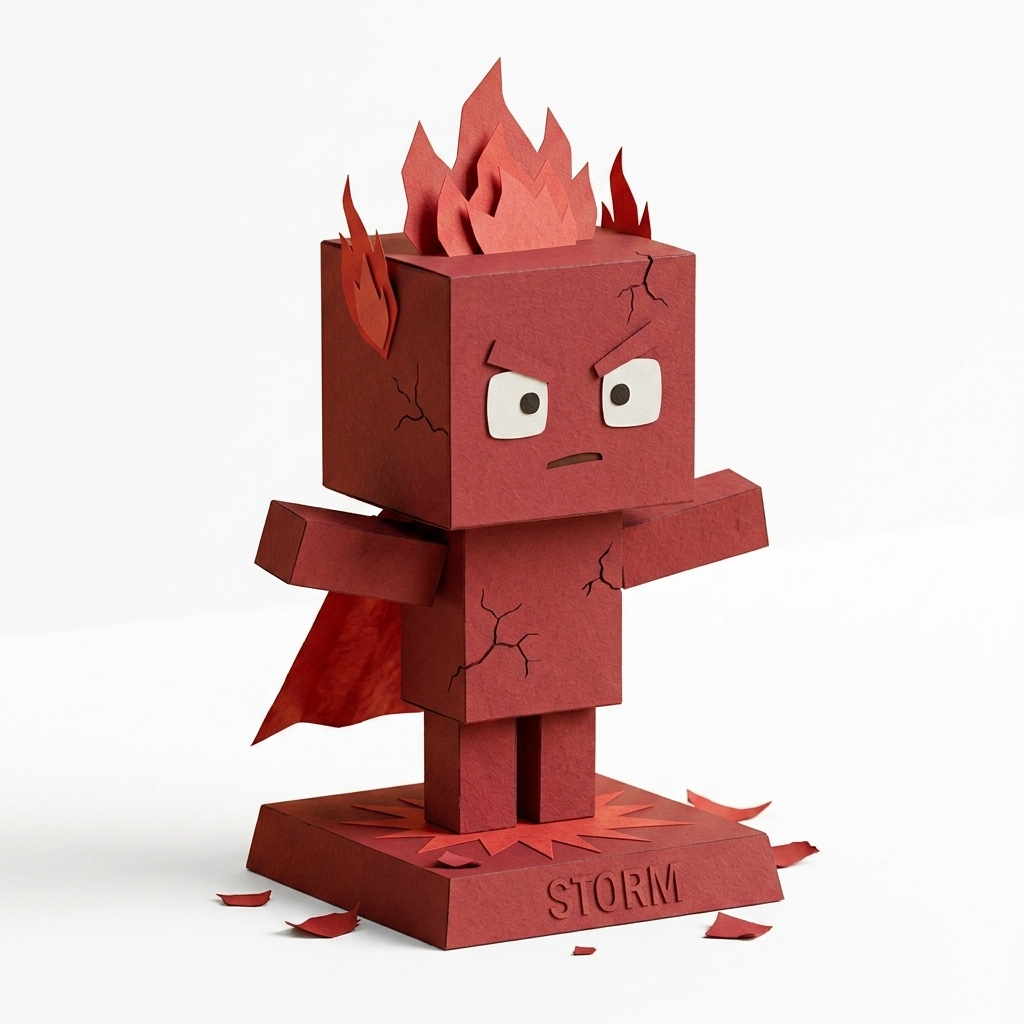



Sprinter
All gas, no cruise control
You operate in bursts. When you're on, you're unstoppable. When you crash, you crash hard. There is no middle gear.

Your Cognitive Blueprint
The Sprinter brain has two modes: full throttle and completely stalled. There is no cruise control. When you're "on," you're a force of nature — accomplishing in hours what takes others days, with a quality that genuinely impresses. When you're "off," you can barely form a coherent thought, let alone produce work. The switch between these states is not under your conscious control.
This boom-bust pattern maps directly to what Dr. William Dodson calls the "interest-based nervous system." Your brain doesn't allocate energy based on importance or schedule — it allocates based on interest, challenge, novelty, and urgency. When these factors align, you experience a dopamine surge that unlocks extraordinary performance. When they're absent, your dopamine system essentially goes offline, and with it, your ability to sustain effort.
"That's So Me" Moments
+ 7 more in your full report
Your Superpowers
Burst Productivity
Your "on" phases produce output that genuinely amazes people — quality and quantity that seems impossible for the time invested. This isn't normal productivity. It's hyperfocus-fueled, dopamine-saturated, flow-state performance. In absolute terms, your total output may match or exceed the steady-state producers around you — it's just compressed into intense bursts rather than spread evenly across time.
Pressure Performance
You thrive in high-stakes, time-limited situations. Emergencies, crunch time, do-or-die moments — these are where your brain activates its full capability. While others freeze under pressure, you come alive. Surgeons, trial lawyers, emergency responders, and sports athletes disproportionately share this cognitive profile because their environments provide the constant urgency your brain needs.
Intensity of Experience
When you're engaged, you're ALL in. You don't just work — you immerse. You don't just enjoy — you absorb. This intensity of experience, while exhausting, means you accumulate deep expertise and profound memories at a rate that steady-state processors can't match. Your "on" hours are worth 3x the value of average hours.
The Hard Parts
Boom-Bust Cycling
The higher you fly during productive phases, the harder you crash. Without intervention, the cycles get more extreme over time — longer, more intense "on" phases followed by deeper, more debilitating "off" phases. This is because each "on" phase depletes more dopamine reserves, and each "off" phase generates more shame-based avoidance. The cycle is self-amplifying unless actively managed.
The Consistency Challenge
You can't predict which version of yourself will show up on any given day. This makes commitments, routines, and reliability genuinely difficult — not because you don't value these things, but because they require a consistency that your neurology literally cannot guarantee. The social cost is enormous: lost trust, damaged relationships, career stagnation despite obvious talent.
Rest Guilt
You see rest as wasted potential rather than necessary recovery. During "off" phases, you're not just physically depleted — you're psychologically tortured by the gap between what you should be doing and what you're capable of doing. This guilt prevents genuine recovery, extending the crash period and deepening the depletion. It's a trap: guilt → failed rest → longer crash → more guilt.
Strategy Playbook
Ride, Don't Drive
During "on" phases, resist the urge to do EVERYTHING. Cap productive sessions at 6-8 hours maximum, even when you feel like you could go for 14. Use the remaining energy for recovery preparation: meal prep, social connection, physical movement. You're not "wasting" productive time — you're reducing the depth and duration of the inevitable crash. The goal isn't maximum output per cycle. It's sustainable output across cycles.
The Crash Kit
Pre-build a crash survival kit during your "on" phase — when you have the energy and executive function to plan. Include: easy meals (frozen, delivery apps pre-loaded), comfort media (shows, podcasts, games queued up), a pre-written text for friends ("I'm recharging, back soon"), and a list of "crash-safe" tasks that require minimal cognitive effort (laundry, organizing photos, easy cooking). Remove all decisions from low-energy states.
Energy Logging
Track your energy daily on a simple 1-10 scale. After a month, you'll see patterns. Most Sprinter types have 3-7 day cycles. Some have longer rhythms tied to menstrual cycles, seasonal changes, or work-stress patterns. Once you see the pattern, you can plan around it — scheduling important work during predicted "on" windows and protecting "off" windows as non-negotiable recovery time.
Reframe Rest as Productive
Rest is not the opposite of productivity. Rest IS productivity. Your brain is literally rebuilding the dopamine reserves it needs for the next sprint. Every hour of genuine rest shortens the crash and brings the next "on" phase closer. Think of it like muscle recovery after intense exercise — the growth happens during rest, not during the workout. Guilt-ridden rest is not rest. It's stress with extra steps.
+ 4 more strategies in your personalized report
Could you be a Masked Sprinter?
Some Sprinters learn to hide their ADHD so well that nobody knows — but it costs enormous energy. Our test detects this hidden layer.
Think you might be a Sprinter?
Take our free 5-minute test to discover your dominant ADHD brain mode. You'll get a personalized report with superpowers, hard parts, and strategies.
Take the Free Test →